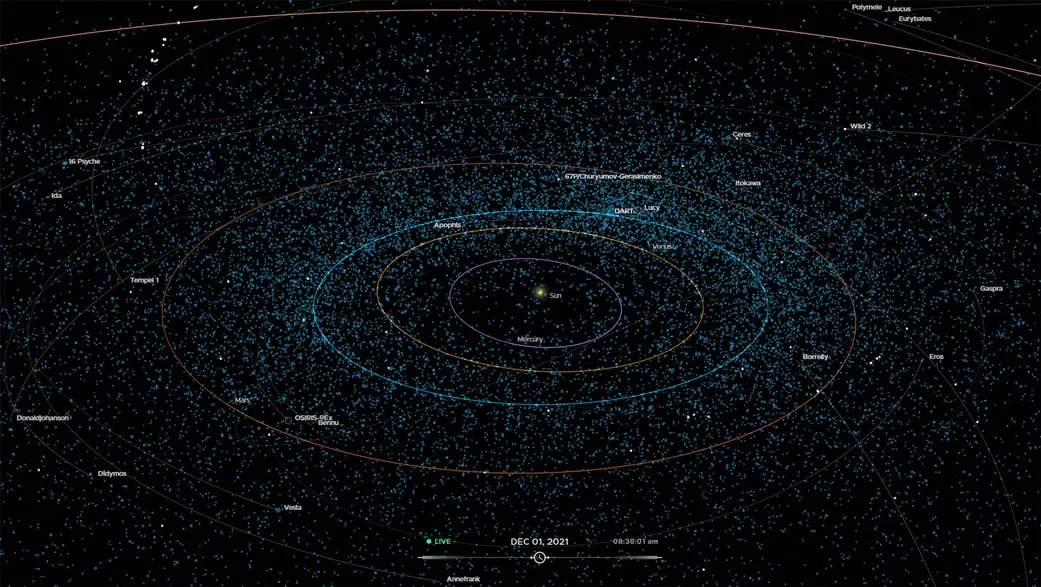
In the ever-evolving realm of space exploration, the quest for Near-Earth Objects (NEOs) has taken on renewed urgency. These cosmic wanderers are not just fascinating celestial bodies; they hold the promise of untapped resources that could one day fuel humanity's ambitions beyond our planet. As missions to asteroids gain momentum, the ability to effectively plan and execute trajectories to these miniature worlds becomes crucial. Recent advancements in astrodynamics may just be the key to unlocking this potential—making it easier and more energy-efficient to reach these tantalizing targets.
A new study led by astrodynamicist Alessandro Beolchi from Khalifa University of Science and Technology has unveiled a revolutionary approach to trajectory planning for NEOs. Traditionally, calculating the optimal path to these asteroids has been a computationally intensive task, often requiring vast amounts of processing power and time. However, Beolchi's innovative method simplifies this process significantly, allowing for quicker and less energy-consuming calculations, which is essential as space missions become more ambitious.
This new technique leverages advanced algorithms that streamline trajectory analysis, making it not only more accessible to mission planners but also more adaptable to real-time changes in trajectory due to dynamic space environments. By calculating less energy-intensive paths, this approach could lead to more sustainable missions, allowing spacecraft to conserve precious fuel while maximizing their operational efficiency. This is particularly vital as agencies like NASA, ESA, and private enterprises like SpaceX prepare for future asteroid missions aimed at resource extraction and planetary defense.
The implications of this research extend beyond mere trajectory calculations. In the broader context of space exploration, the ability to efficiently reach NEOs plays a significant role in humanity's expansion into the solar system. As nations and private companies race to establish a foothold in space, the potential for asteroid mining and resource utilization becomes ever more appealing. Materials such as water, metals, and even rare elements could provide the building blocks for future space colonization efforts and deep-space exploration.
CuraFeed Take: This advancement in trajectory planning is not just a technical triumph; it represents a paradigm shift in how we approach space missions. The winners here are not only scientists and engineers, but eventually all of humanity, as we inch closer to becoming a multi-planetary species. As we watch how this new methodology is adopted in upcoming missions, particularly those targeting NEOs, it will be exciting to see the impact on future space initiatives—both in terms of cost-effectiveness and the feasibility of ambitious projects. Keep an eye on agencies like NASA and ESA as they likely incorporate these innovative techniques into their mission strategies, potentially reshaping our endeavors in the cosmos for decades to come.