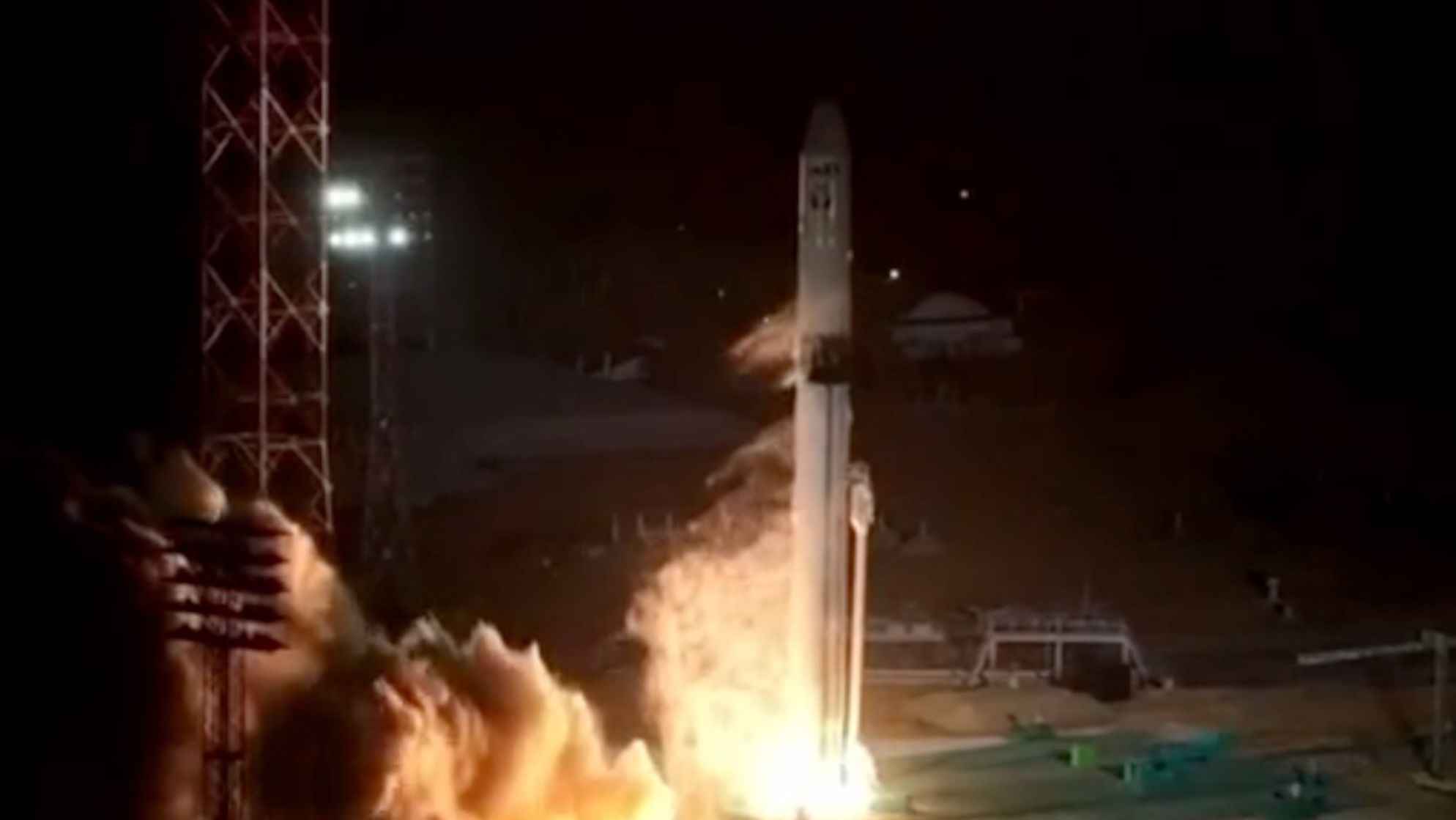
As the world of space exploration continues to heat up, every launch sparks curiosity and excitement among space aficionados. On April 30, 2026, Russia made a significant leap forward with the successful debut of its Soyuz 5 rocket, a project that has been in the making for years. This launch not only marks a pivotal moment for Russian aerospace but also reaffirms the nation's commitment to maintaining its presence in the competitive landscape of space missions.
The Soyuz 5 rocket, a medium-lift vehicle, blasted off from the Baikonur Cosmodrome in Kazakhstan, carrying with it a payload that included a series of satellites for various applications. Although the specifics of the payload remain somewhat under wraps, it is anticipated that these satellites will enhance Russia's capabilities in communications, Earth observation, and scientific research. The launch was executed flawlessly, and the rocket performed according to expectations, providing a much-needed boost to Russian space initiatives.
This new rocket is designed to be a versatile workhorse in Russia’s fleet, capable of lifting up to 17 metric tons to low Earth orbit. With a modern design that incorporates advanced technologies, the Soyuz 5 aims to replace the aging Soyuz 2 and complement other launches, including crewed missions to the International Space Station (ISS). The success of this mission not only showcases Russia's engineering prowess but also signals a renewed focus on independent space capabilities in the wake of international competition.
In the broader context of space exploration, the successful launch of Soyuz 5 is a crucial development in the ongoing race among global space powers. With NASA ramping up its Artemis missions to return humans to the Moon and private companies like SpaceX and Blue Origin pushing the envelope of commercial spaceflight, Russia's advancements are a reminder of its critical role in international space endeavors. The Soyuz program has a storied history, and the introduction of the Soyuz 5 is an attempt to reinvigorate Russia's legacy in an increasingly competitive arena.
CuraFeed Take: The successful debut of the Soyuz 5 is not just a win for Russian aerospace; it's a clear signal that Russia is not backing down in the space race. With new technologies being developed and tested, we can expect to see more ambitious missions in the coming years. As nations like the United States and China push their own boundaries, all eyes will be on how Russia leverages the Soyuz 5 in future collaborations and competitive launches. The next chapter of space exploration is unfolding, and it promises to be as thrilling as ever.