The excitement surrounding space exploration has reached new heights as SpaceX's Falcon Heavy rocket roared back into action on April 29, 2026, after an 18-month break. This monumental launch not only signifies the revival of one of the most powerful rockets in existence but also underscores a pivotal moment in the ongoing quest to expand our presence beyond Earth. With the Falcon Heavy's ascent, we are reminded of the profound impact that such missions have on our understanding of the universe.
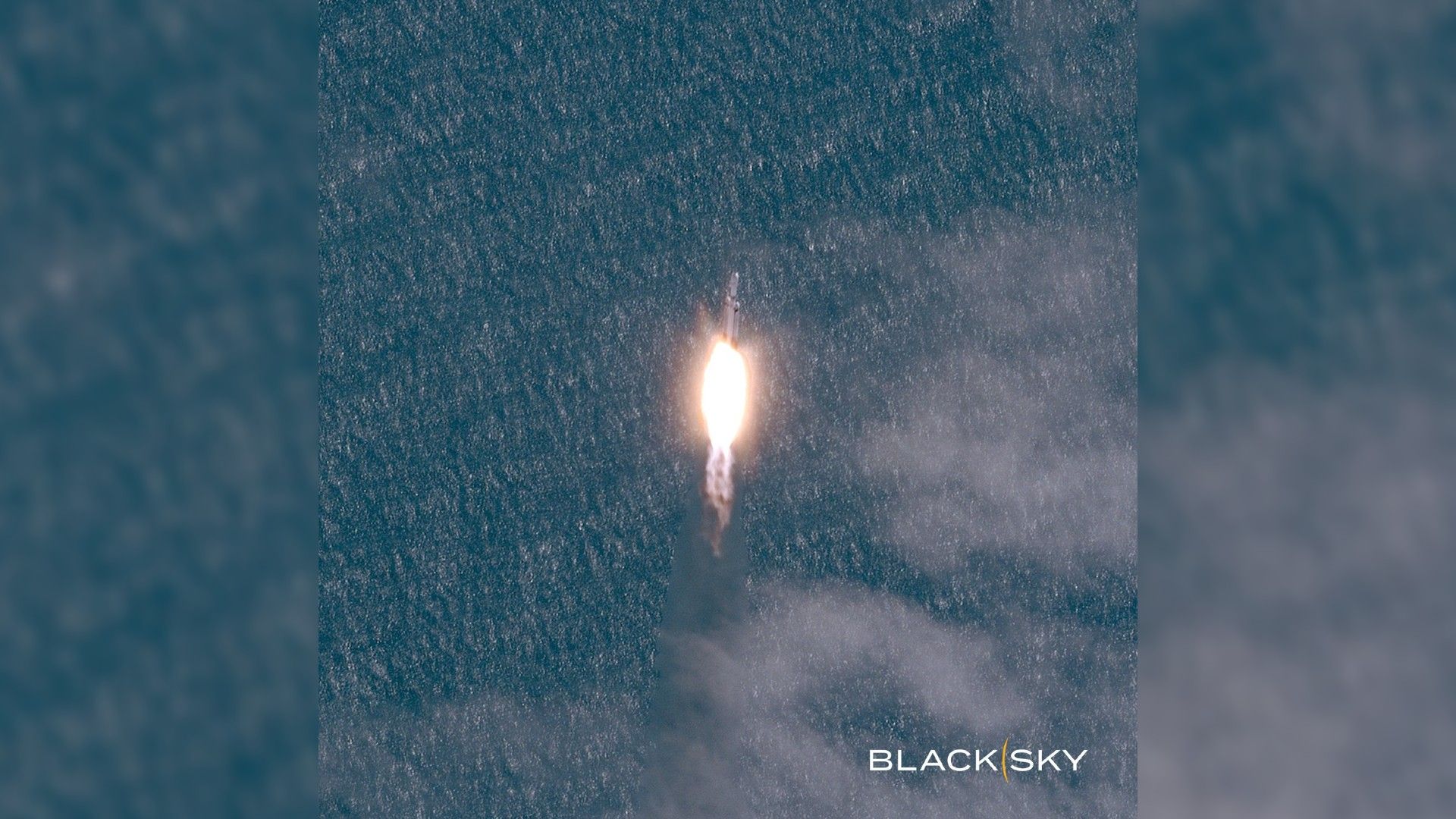
The Falcon Heavy, which boasts an impressive payload capacity of 64 metric tons to low Earth orbit, took off from the Kennedy Space Center in Florida, carrying with it a suite of scientific instruments and technological demonstrations aimed at enhancing our capabilities in space. As the rocket soared into the stratosphere, it was tracked by advanced satellite systems, one of which captured striking images illustrating the dynamic interplay between rocket propulsion and the atmospheric layers it traverses. These remarkable photos not only serve as a visual feast but also provide invaluable data for researchers studying atmospheric dynamics and propulsion technologies.
In the years since its last flight, the Falcon Heavy has undergone significant upgrades. These enhancements include improved engines and avionics, which have been meticulously designed to maximize efficiency and reliability. SpaceX’s commitment to advancing rocket technology is evident, as they continue to push the boundaries of what is possible in both crewed and uncrewed space missions. The successful launch reinforces the rocket’s reputation as a versatile platform capable of supporting a diverse range of missions, from deploying satellites to facilitating scientific research on the Moon and Mars.
In a broader context, this launch is not merely a testament to SpaceX's capabilities; it is also a reflection of an evolving commercial space landscape where public-private partnerships are becoming increasingly common. These collaborations are critical in advancing our understanding of astrophysics and cosmology. As we push the boundaries of exploration, the data collected from such missions will further enrich our knowledge of exoplanets, dark matter, and the very fabric of the universe itself. The Falcon Heavy's return is emblematic of a larger movement towards a multi-faceted approach to space exploration, where both governmental and private entities work together to unlock the secrets of the cosmos.
CuraFeed Take: The successful launch of the Falcon Heavy represents a significant leap forward in our quest for cosmic knowledge. As commercial space travel continues to gain momentum, we can expect an influx of data that may revolutionize our understanding of astrophysics. Scientists and astronomers should closely monitor the implications of these advancements, as the technological innovations borne from missions like this could lead to breakthroughs in our understanding of dark matter, exoplanets, and the fundamental principles that govern our universe. The next few years will be crucial in determining how effectively we can utilize these advancements to explore the final frontier, and the Falcon Heavy's triumphant return may just be the catalyst we need to propel us into the next era of space exploration.