In an era where humanity is on the brink of becoming a multi-planetary species, the development of advanced propulsion systems is critical for the success of future missions to Mars. The recent successful test of a lithium-plasma engine marks a significant milestone in space exploration, one that could change how we perceive the journey to the Red Planet. With this technology, we could witness not just a faster journey, but also the potential for more complex exploration of our solar system.
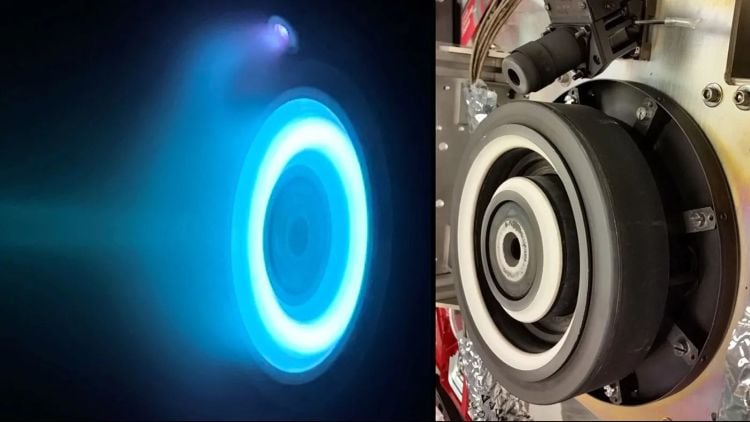
The lithium-plasma engine, designed to be used in the upcoming Odyssey spacecraft, has recently passed a series of rigorous tests that validate its efficiency and capabilities. This innovative propulsion system utilizes lithium as a propellant, harnessing its unique properties to create a plasma that can be accelerated to achieve remarkable thrust. During the tests, the engine's performance showed an ability to eventually reach speeds exceeding 400,000 kilometers per hour (over 250,000 miles per hour), transforming what was once thought of as a slow crawl into a breathtaking journey across the cosmos.
The engineering team behind this breakthrough includes a collaboration of experts from NASA and various aerospace technology companies, who have worked diligently to refine the engine's design. The lithium-plasma engine operates on the principles of electric propulsion, combining the advantages of traditional chemical engines with the efficiency of ion thrusters. This dual capability allows for sustained thrust over longer periods, enabling spacecraft to gradually build up incredible velocities without burning excessive fuel. Such technology is particularly advantageous for interplanetary missions, where payload efficiency and travel time are paramount.
This development is not merely a technical achievement but also a critical step toward a future where human presence on Mars becomes a reality. As we stand on the threshold of sending humans to Mars, the implications of this propulsion technology reach far beyond just a faster journey. The ability to traverse the vast distances of space with greater efficiency could open up new avenues for exploration, including the potential for deeper missions into our solar system and beyond.
In the broader context of space exploration, this breakthrough in propulsion technology can significantly impact the ongoing discussions about sustainable human presence on other planets. With the challenges of space travel including radiation, microgravity, and psychological effects on astronauts, the efficiency of propulsion systems can alleviate some logistical hurdles. By shortening the travel time to Mars, we not only reduce the exposure to these challenges but also enhance the feasibility of conducting scientific research during the mission.
CuraFeed Take: The successful test of the lithium-plasma engine is a game-changer for the future of interplanetary travel. As we move closer to realizing manned missions to Mars, this technology could very well tip the scales in favor of ambitious exploration objectives, potentially paving the way for humanity to establish a permanent presence on the Martian surface. Observers should keep an eye on further developments and the integration of this engine into the Odyssey spacecraft, as it may redefine our understanding of space travel and exploration in the coming decades.