As we approach May 2026, the Southern Hemisphere offers a captivating celestial display that should excite both seasoned astronomers and enthusiastic stargazers alike. The evening sky is set to present an extraordinary show, with the brilliant planets Venus and Jupiter shining brightly in the northwest as dusk settles. This is not merely a visual spectacle; these planetary observations provide key insights into planetary dynamics and the gravitational influences that shape their orbits.
Leading the charge in this planetary showcase is Venus, often dubbed the "Evening Star" due to its radiant luminosity. With a magnitude of –3.9, Venus is an eye-catching object that even amateur astronomers can easily locate—provided they time their observations just right. As twilight fades, Venus will gradually emerge from the Sun's glare, moving away from it in the night sky. This celestial ballet of Venus's movement is particularly intriguing, as it highlights the challenges of visualizing planetary positions given the overwhelming brightness of our star during sunset.
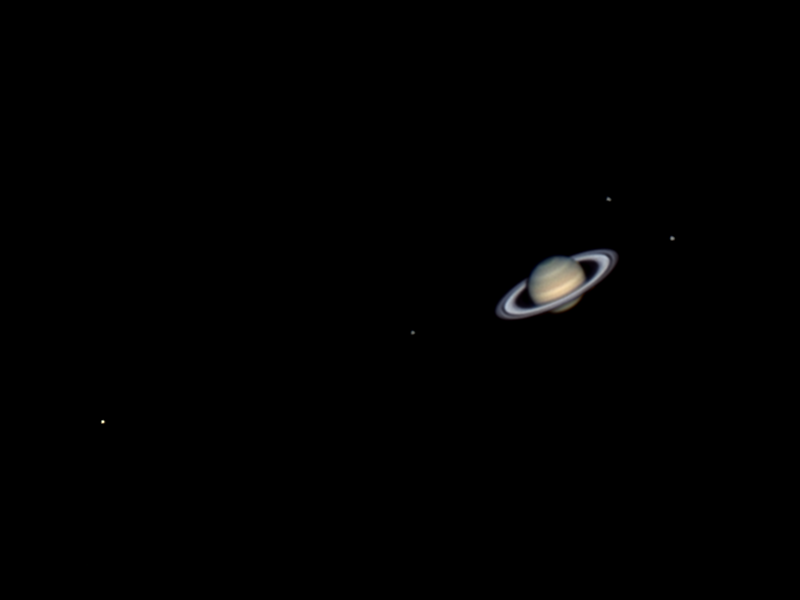
Following closely behind is the majestic Jupiter, which, while not as bright as Venus, still commands attention with its sheer size and grandeur. As the largest planet in our solar system, Jupiter's extensive atmospheric features and its retinue of moons provide a wealth of observational opportunities. Enthusiasts with telescopes will be rewarded with views of the planet’s cloud bands and possibly even its Galilean moons, each revealing the dynamic nature of this distant world and its intricate dance with gravity.
This month’s planetary alignment is not just a random occurrence; it serves as a reminder of the intricate mechanics of our solar system. Observers in the Southern Hemisphere can take the opportunity to study the relative positions of these planets, which can vary significantly depending on the observer's location. The study of these variations is crucial for astrophysicists, as it helps refine our models of planetary motion and the gravitational interactions at play.
Beyond the immediate excitement of observing Venus and Jupiter, this planetary display fits seamlessly into the broader narrative of our understanding of the cosmos. The Southern Hemisphere's celestial events are vital for the global astronomical community, as they provide opportunities to gather data that can be compared with observations from the Northern Hemisphere. Such comparative studies are essential for advancing our knowledge of planetary atmospheres and potential habitability, especially in the context of exoplanet research.
CuraFeed Take: The planetary highlights of May 2026 serve as a beacon for both amateur astronomers and seasoned astrophysicists, reminding us of the beauty and complexity of our solar system. As interest in observational astronomy increases, we must not overlook the implications of these observations for broader cosmological studies. The alignment of Venus and Jupiter presents a unique opportunity for collaboration among global observatories, and it could lead to new insights into the nature of planetary atmospheres and their potential for life. As we look forward, it is crucial to watch how these observations feed into ongoing research, particularly in exoplanetary science, where understanding planetary atmospheres could one day inform our search for life beyond Earth.