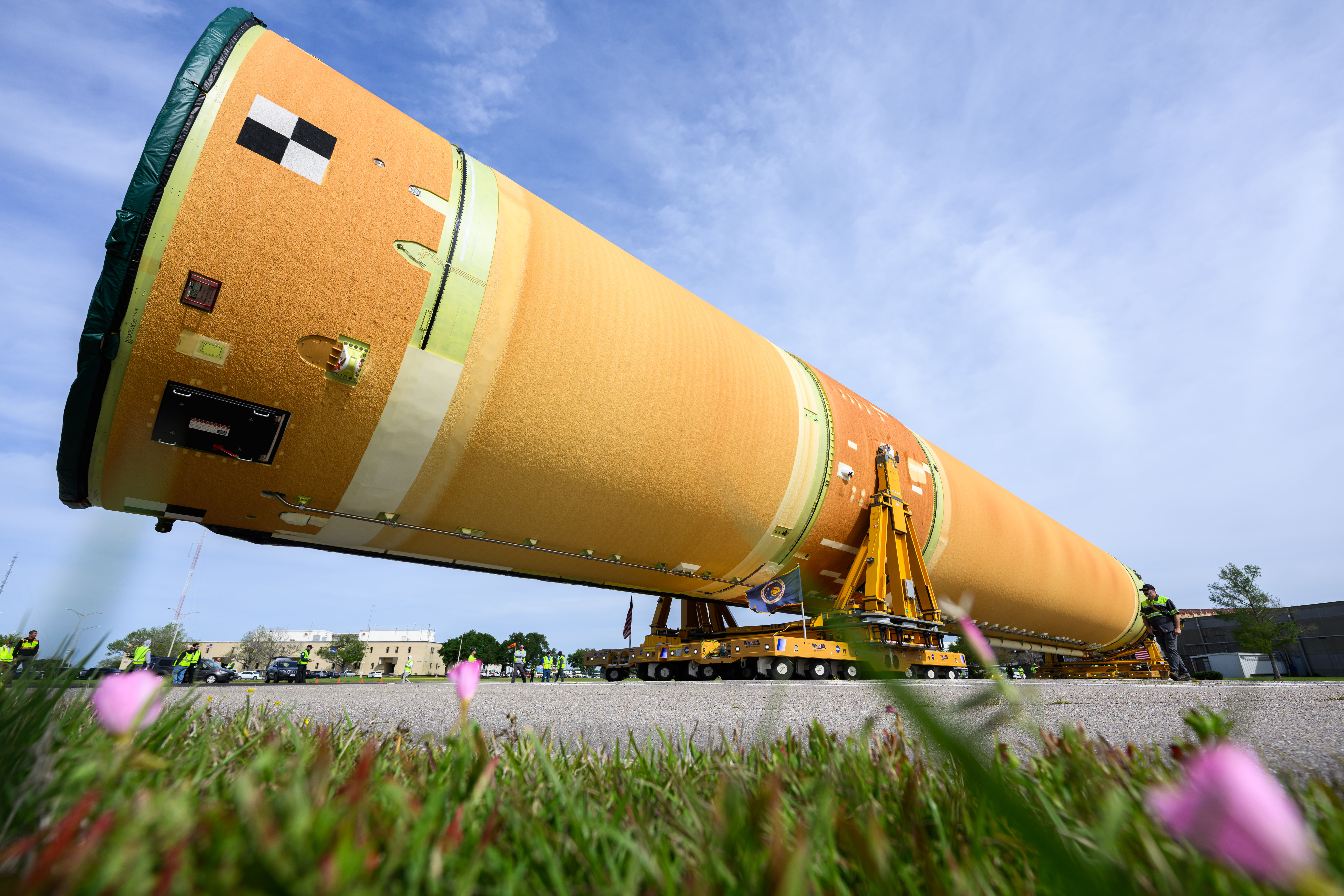
In an electrifying moment for space exploration, the core stage of NASA's Space Launch System (SLS) rocket for the Artemis III mission has officially landed at the Kennedy Space Center in Florida. This key milestone not only marks a significant step toward returning humans to the Moon but also heralds a new era of lunar exploration as we prepare for the next chapter in our quest to understand our celestial neighbor.
On April 27, 2026, the SLS core stage made its way from NASA's Michoud Assembly Facility in New Orleans to the Vehicle Assembly Building (VAB) at Kennedy Space Center, a journey of approximately 900 miles via the Pegasus barge. This massive structure, which stands at an impressive 212 feet tall and weighs around 200 tons, is the largest rocket stage ever built, designed to deliver astronauts to the lunar surface in the upcoming mission. The core stage will provide the necessary thrust to propel the Orion spacecraft, along with its crew, beyond low Earth orbit.
The arrival of the SLS core stage is a critical piece of the Artemis III mission, which aims to land the first woman and the next man on the Moon by 2026. This mission is part of NASA's broader Artemis program, which envisions establishing a sustainable human presence on the Moon and laying the groundwork for future Mars missions. The Artemis III mission is not just about lunar landing; it's about pushing boundaries, advancing technology, and fostering international collaboration in space exploration.
As the world eagerly watches the progress of the Artemis program, this core stage delivery symbolizes not only the technological advancements achieved but also the perseverance and dedication of thousands of engineers, scientists, and support staff who have worked tirelessly to make this vision a reality. The core stage will now undergo a series of critical tests and integrations before it is ultimately mated with the rest of the rocket for a series of test flights leading up to the historic lunar landing.
The Artemis III mission stands as a testament to humanity's bold aspirations in space; it’s a stepping stone in the quest to explore deeper into our solar system. This mission will enable extensive research opportunities, including the potential discovery of resources on the Moon that could aid future missions to Mars and beyond. As we prepare to return to the lunar surface, the excitement and anticipation in the space community are palpable, with scientists and engineers gearing up for the landmark mission.
CuraFeed Take: The successful arrival of the SLS core stage is a clear signal that NASA is on track to meet its lunar goals, and it highlights the agency's commitment to advancing human spaceflight. While the Artemis program faces challenges, including budget constraints and technical hurdles, its potential for scientific discovery and international collaboration is unmatched. As we look forward to the next steps in the Artemis program, all eyes will be on the upcoming test flights and the integration of the rocket components, paving the way for a new era of lunar exploration and setting the stage for humanity's future on Mars.