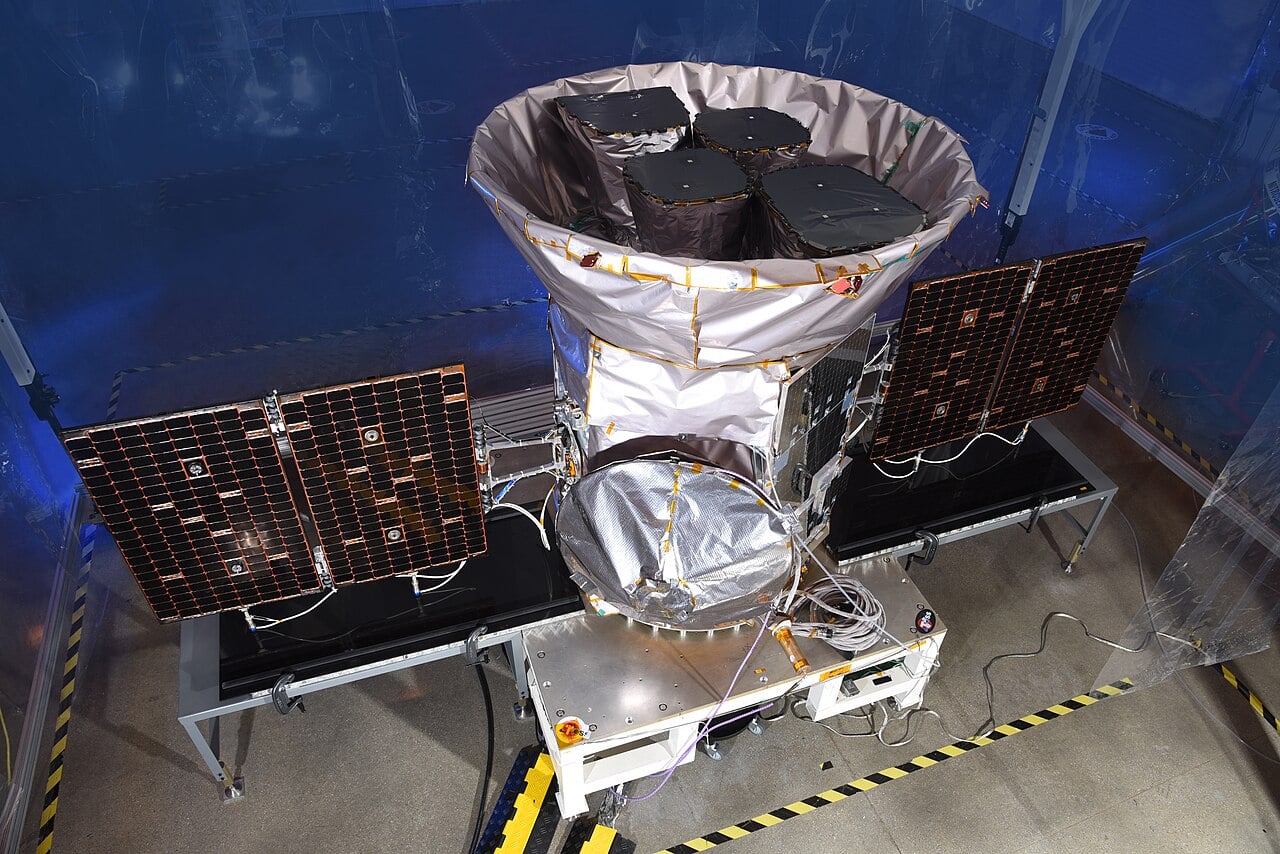
The field of exoplanet research is experiencing a seismic shift as new insights emerge from the Transiting Exoplanet Survey Satellite (TESS). Launched in 2018, TESS’s mission has been to catalog thousands of new planets beyond our solar system. Recent analyses of its data reveal that the landscape of our galaxy is not as populated by sub Neptunes as previously believed. This has profound implications for our understanding of planetary systems, particularly in terms of spacecraft design, mission planning, and propulsion strategies aimed at exploring these alien worlds.
Researchers utilizing TESS data have documented a surprising trend: while rocky super Earths are abundant around cooler, faint stars—known as M-dwarfs—sub Neptunes are markedly scarce. This finding stands in stark contrast to earlier models, which predicted that these larger, gaseous planets would be plentiful in environments rich with low-mass stars. The implications of this research extend beyond mere numbers; they force us to reconsider how we design instruments and propulsion systems for future missions targeting exoplanet exploration.
The TESS observations reveal a complex interplay between stellar characteristics and planetary formation. The M-dwarfs, which comprise nearly 70% of the stars in our galaxy, are conducive to the formation of rocky planets due to their cooler temperatures and longer lifespans. However, the lack of sub Neptunes around these stars suggests that the conditions necessary for their formation may not exist in these environments. This challenges existing models of planetary evolution and raises questions about the physical processes that govern planet formation in various stellar contexts.
In the larger context of AI and machine learning applications in astronomy, this discovery underscores the necessity for advanced computational models to better predict exoplanet populations. The integration of AI can enhance our understanding of the intricate dynamics of different star types and their planetary systems. As the industry moves towards an era of increased reliance on data analytics and predictive modeling, the implications for spacecraft design and mission architecture are vast.
CuraFeed Take: The implications of these findings are significant for both theoretical astrophysics and practical engineering. As we refine our understanding of where to find habitable worlds, spacecraft designers must adapt their strategies to focus on rocky super Earths, which now appear to be prime candidates for habitability studies. This shift in focus could also inform the development of more efficient propulsion systems, enabling missions to these newly identified targets with greater precision and efficacy. As we look ahead, the challenge will be to integrate these new insights into the fabric of future exploration missions, ensuring that we are equipped not only to observe but also to understand the complexities of these alien environments.