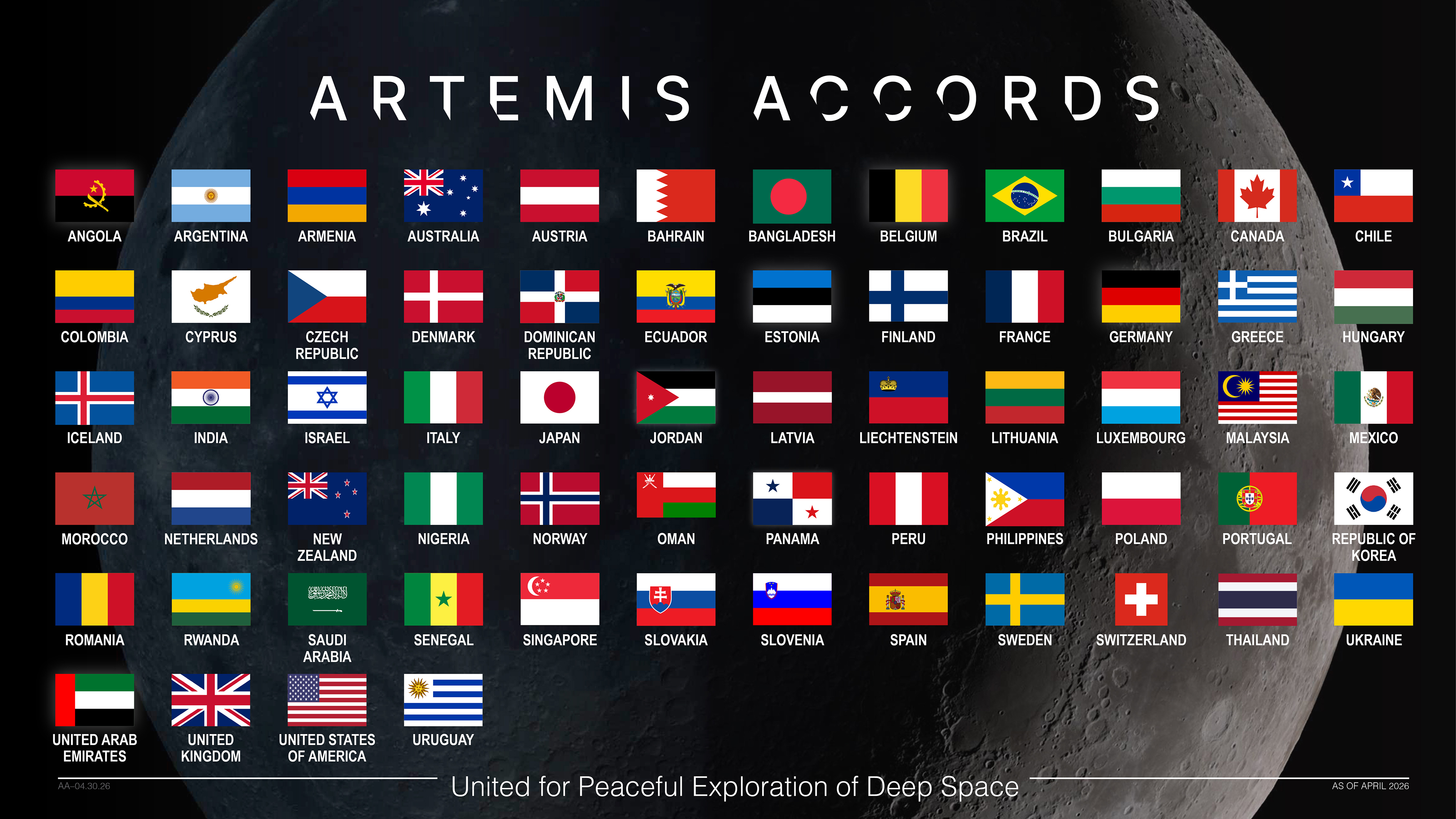
In a pivotal moment for global space exploration, Morocco officially signed the Artemis Accords on April 29th, 2026, during a ceremony held in Rabat, the nation’s capital. This addition marks Morocco as the 64th country to join the growing coalition that aims to establish a framework for responsible and sustainable exploration of outer space. As we stand on the brink of a new era in aerospace, the implications of such partnerships are profound, emphasizing collaboration in a domain that is becoming increasingly crowded and competitive.
The Artemis Accords, initiated by NASA, are designed to foster international cooperation and set forth guidelines for the exploration of the Moon, Mars, and beyond. By committing to these accords, Morocco joins an esteemed group of countries committed to safety, transparency, and the peaceful use of outer space. NASA Administrator Jared Isaacman welcomed Morocco, highlighting the importance of shared values and cooperative endeavors in shaping the future of space missions. The Accords encompass critical tenets such as the establishment of safe zones on celestial bodies, the sharing of scientific data, and the commitment to protect heritage sites on the Moon and other planets.
Morocco's signing is not just symbolic; it reflects the nation's aspirations to advance its capabilities in aerospace technology and research. The Moroccan Space Agency (MASA) has been making strides in satellite technology and applications, and this agreement could enhance collaborative projects with other signatory nations. This includes potential partnerships in propulsion systems, spacecraft design, and launch infrastructure development, which are crucial for any nation aspiring to become a player in the space industry.
As more countries like Morocco align themselves with the Artemis Accords, this movement underscores a significant shift towards a unified approach to space exploration. The Accords serve as a catalyst for innovation, encouraging participating countries to share knowledge, technology, and resources. This collaborative environment can lead to advancements in propulsion systems that are essential for sustainable travel beyond Earth, as well as improvements in spacecraft design that prioritize safety and efficiency.
In the broader context of the AI landscape, the integration of artificial intelligence in space exploration is becoming increasingly relevant. With nations looking to utilize AI for mission planning, navigation, and data analysis, the Artemis Accords provide a framework within which AI technologies can be developed and deployed responsibly. As countries like Morocco expand their capabilities, the use of AI will likely play a pivotal role in optimizing spacecraft operations and enhancing mission outcomes.
CuraFeed Take: Morocco's accession to the Artemis Accords is a clear signal that space exploration is no longer the domain of a select few nations. As we witness the democratization of access to space, this presents both opportunities and challenges. Countries that embrace collaboration will gain a competitive edge in the rapidly evolving aerospace sector, while those that remain isolated may find themselves at a disadvantage. The next steps will likely involve Morocco enhancing its technological capabilities and establishing partnerships that leverage its unique position in North Africa. As the Artemis program progresses, it will be crucial to monitor how these collaborations shape the future of space exploration and technology development, especially in areas such as propulsion and spacecraft manufacturing.